Thursday, 18 September 2014

Captain A S M Summers, Royal Flying Corps

Captain Summers' Cavalry Sword
A friend asked me to take a sword along to the Antiques Roadshow. It’s a First World War cavalry sword. My friend had done quite a bit of research about the blade, having determined from it’s serial number to whom it belonged.
The then Lieutenant A S M Summers took delivery of his sword in October 1909 from Wilkinson Sword. When war broke out, this former Yeoman officer was with the 19th Hussars. This regiment was attached to the infantry divisions in the BEF for the early months of the war, and Lt.Summers was assigned to the machine-gun detachment of his squadron.
He later joined the Royal Flying Corps as a pilot, and saw action with 60 Squadron RFC. Amongst his peers in August and September 1916 was Albert Ball, VC. Captain Summers, by then a flight leader, was killed in action on 15th September 1916 during the Battle of Flers–Courcelette.
I tracked down the following article that explains how he died. He was involved in an attack on enemy observation balloons using a new air-to-air weapons system.


Summers in front of his Morane fighter
In 1914 aircraft armament was a carbine in the cockpit and maybe a grappling hook trailing behind and below. Then, in only a matter of months, fighter plane fire power advanced to machine guns that fired through a rotating propeller and even wing mounted rockets which were crude but effective enough to be used by both the Allies and the Germans air services.
First air-to-air missile combat victory, Lt. A. M. Walters RFC Sept. 16, 1916 at the Battle of the River Somme
And so this sets up one of the great forgotten stories of WW I— a British pilot scores the very first aerial victory by air-to-air missile but then his accomplishment—and name—is lost in the drama and fog of battle. And even more ironically, this war fighter’s exploit was recorded in a large dramatic painting by a famous artist, but he was misidentified and so his historic action has only came to light when the painting of the air battle was discovered on the wall of a modest house in Bristol, Rhode Island almost 100 years after the historic aerial event.

The man who made air-to-air missile ordinance operational was Lt. Yves Le Prieur, a French army officer assigned to Japan before the war and who extrapolated the idea of turning fireworks into an airborne weapons system. Le Prieur’s rockets were just a cardboard tube filled with black powder, attached to a wooden stick fitted with a triangular knife blade to form a spear point. They were far from accurate and a little dicey when it came time to throw the electrical ignition. But a few forward thinking military minds recognized the possibilities, and for a short time in 1916, Le Prieur fire rockets became an important factor in air war strategy.
The story of Le Prieur’s rockets is fascinating and amusing. Le Prieur had to show the Generals that his idea worked before they would install them on an airship. So the inventive inventor took a Piccard-Pictet roadster, strapped on an actual airplane wing to which his rockets were attached, and then shot down a runway at 80 mph, blazing away. Apparently, whatever was destroyed this first rocket salvo did not embarrass anyone, and so M. Le Prieur became the first person to effectively prove that air-to-air missiles were a realistic war-fighter option.
All this then circles back to the story of the long forgotten painting (above) by an artist called Farre who personally captioned his work as an exploit of a “Lt. Summers.” This was to later cause much confusion because when research on the painting began, there was lots of information about an ace named Lt. Summers—but that fellow flew a different aircraft and all his victories were in 1918.
Finally, members of the League of WW I Historians solved the mystery, and here is the (edited) story they unravelled:

On September 15, 1916—the opening day of the Third Phase of the massive Battle of the Somme— RFC headquarters wanted the German balloons in the sector of the Flers-Courcelette assault all destroyed. General Trenchard (in command the RFC) visited No. 60 Squadron (which included the famous ace Albert Ball) and asked for volunteers to attack the balloons. Capt. Ball, 2Lt. A M Walters, 2Lt Euan Gilchrist, and Capt. A.S.M. Summers all volunteered. They all took off in (French) Nieuports armed with LePrieur Rockets.
Albert Ball and 2/Lt Walters found their balloons hauled down. They therefore attacked a formation of German planes. Ball fired off eight rockets but missed so he shot down the enemy fighter with conventional machine-gun fire. His wingman, 2Lt A M Walters, fired his rockets at one of the LVG two-seaters and saw a rocket hit the LVG in the fuselage, setting it aflame. The flaming LVG fell at Bapaume. This may very well have been the first air-to-air rocket victory against a heavier than air target.
Meanwhile, Gilchrist had destroyed his balloon and another was also destroyed and credited to Capt. A S M Summers, who was sadly shot down in flames by the anti-aircraft fire. Summers died in Nieuport 16, military serial number A136.
So, it was not actually Summers but Walters who destroyed an enemy airplane with LePrieur rockets. Lt. Walters fired 4 rockets. One hit the LVG and brought it down.

And there you have it. Lt. Walters, who actually made aviation history, and has languished invisible for a century, and would be forever unknown except for a diligent artist who captured that fleeting moment in a scene of celestial beauty and dramatic death.

This painting ended up in the USA because in 1918, the French government sent the artist and his war time artwork on a tour of the United States, ostensibly to raise money for the widows and orphans of slain pilots, but more likely to increase support for the US as it mobilized troops entering the European conflict. This painting was purchased in New York at the Anderson Galleries during the first exhibit on the tour, and then stayed with that family for three generations.

Wednesday, 27 August 2014

West Lydford Casualties, Le Cateau, 26 August 1914

Troops of the 4th Division at Le Cateau
On 26th August 1914, the 1st Battalion Somerset Light Infantry, part of the 4th Division of the BEF, were defending the village of Ligny near Le Cateau. During the day, they fought off repeated attempts by the Germans to outflank them. They were ordered to retreat later that day.

The British suffered around 8,000 casualties in the battle, two of which are young men from the village of West Lydford (Lydford on Fosse), Somerset.


Private 6749 William C Mintern (Alias: W ROSSITER). 1/Somerset Light Infantry, aged 26. Son of Fredrick W. and Ann Mintern, of 17, Market St., Yeovil.

Private 6748 Walter Tudgay. 1/Somerset Light Infantry, aged 30. Husband of Ethel Beatrice Tudgay and father of Irene Tudgay, of 42, High St., West Lydford, Taunton. Known to be a bell ringer at the local church. Walter's family lived the rest of their lives in West Lydford and are buried in the local churchyard.

Yesterday, the centenary of the battle of Le Cateau, today's bell ringers commemorated William and Walter's sacrifice by ringing the church bells at St Peters - the same bells Walter rang himself before they went away to war. https://www.youtube.com/watch?v=yPWUMsjxI3A&feature=youtu.be


The sharp-eyed amongst you will spot that Walter and William's service numbers are one digit apart. I like to think that they were friends who went off together, but never came back.

They have no known grave. As the battalion retreated, there was no time to collect the bodies of their fallen comrades, and so they were probably buried by the Germans after the battle in a mass grave. Both are commemorated on the La Ferte-sous-Jouarre Memorial and, of course, in the churchyard at St Peter's in West Lydford.

The La Ferté-sous-Jouarre Memorial commemorates 3,740 officers and men of the British Expeditionary Force (BEF) who fell at the battles of Mons, Le Cateau, the Marne and the Aisne between the end of August and early October 1914 and have no known graves.


You can read more about the battle here: http://www.britishbattles.com/firstww/battle-le-cateau.htm

Monday, 30 June 2014

Satnav and vinyl

 
It’s been a week of contradictions; I have both spurned and embraced modern technology.
I spent the weekend listening to my old vinyl records after having obtained what used to be called a gramophone, but which I believe is now called a turntable. Back in about 1991, I boxed up my LPs for a house move, and these by-now classic albums have languished in various attics ever since. I couldn’t wait to literally dust-off Dark Side of the Moon, even though I regularly listen to it on CD. As I sat on the floor of the lounge surrounded by album covers, protective sleeves and soft dusters, Any Colour You Like blaring, my wife came in.

‘I didn’t know you liked harpsichord music, darling. I have some lovely choral CDs in my bureau if you want to listen to some more.’

‘It’s not a harpsichord. Actually it might be a harpsichord. But it’s certainly a classic, especially on the original vinyl,’ I added, nodding sagely.

‘It doesn’t matter how you listen to your music, it’s not going to make it sound any better. You have to accept that it’s simply too old fashioned.’

‘It’s The Pink Floyd,’ I explained, giving the band their definite article as befits a true enthusiast.

 ‘Darling, Pink Floyd’s time has come, and gone – thank goodness. And please don’t indoctrinate our daughter into early-seventies, psychedelic rock groups.’

Our daughter moved gracefully around the room, impressively finding a rhythm to dance to in The Great Gig in the Sky.

‘You let her watch Mamma Mia,’ I countered, ‘ABBA are a seventies group.’

‘ABBA is timeless in a way that neither Supertramp nor Led Zeppelin will ever be.’ She smiled as if there was nothing further to say.

Led Zeppelin.

‘Oh, no you don’t,’ she said as I reached for the Song Remains the Same.

I’d bought the turntable on a whim during a trip to Currys earlier in the week. We’d just had a voluble discussion about the route home from a clock auction near Bath. It was no good; Google maps were simply not getting us closer to our mutual destination. In the same way that the mobile phone has supplanted the two pence piece as a means of facilitating telephone calls, so SatNav has replaced my AA route master maps.
 

As we left Currys, I tore open the packaging of my TomTom, and entered our home address into the keypad. Leaving the car park, I ignored the instruction to go left at the roundabout.

‘Darling, she said to turn left.’

‘I know; but that’s not the best way. It’s better to go straight on here, and right at the next junction,’ I explained.

My wife sighed, and although I know that the female voice inside the box on my dashboard has no emotions, I felt sure that her tone changed as I continued blatantly to ignore her advice, muttering to myself as she attempted to correct my deviation from her planned route.

And just as a homecoming is made so much sweeter when you navigate yourself there, even if accompanied by shrill instructions to turn round as soon as possible, so Money sounds far superior on vinyl, clicks and all. The only downside is that you have to get up and turn the record over after The Great Gig in the Sky if you want to hear it; you don’t have that problem with MP3.

Tuesday, 24 June 2014

Breaking the Trasimene Line on the forgotten front

British troops in close combat, Italy 1944
The Trasimene Line was a German defensive line during the Italian Campaign of World War II. The commander of German forces in Italy, Field Marshal Albert Kesselring, used the line to delay the Allied northward advance in Italy in mid June 1944 to buy time to withdraw troops to the Gothic Line and finalise the preparation of its defence.

After the Allied capture of Rome on 4 June 1944 following successful breakthrough at Cassino and Anzio during Operation Diadem in May 1944, the German Fourteenth and Tenth Armies fell back: the Fourteenth along the Tyrrhenian front and Tenth through central Italy and the Adriatic coast. There was a huge gap between the armies and with the Allies advancing some 10 km per day, the flanks of both armies were exposed and encirclement was threatened.

Two days after Rome fell, General Sir Harold Alexander, commander of Allied Armies in Italy, received orders from General Sir Henry Maitland Wilson, the supreme Allied commander Allied forces Mediterranean theatre to push the Germans 170 miles north to a line running from Pisa to Rimini (i.e. the Gothic Line) as quickly as possible to prevent the establishment of any sort of coherent enemy defence in central Italy.

Between 4 June and 16 June, whilst maintaining contact with the advancing Allies, Albert Kesselring executed a remarkable and unorthodox manoeuvre with his depleted divisions, resulting in his two armies aligning and uniting their wings on the defensive positions on the Trasimene Line.

By the last week of June the Allies were facing the Trasimene positions. The toughest defences were around the lake itself with fierce fighting on 17 June at Città della Pieve and 21 June at San Fatucchio. But by 24 June, the Allies had worked their way round to the north shore and linked and the German defenders withdrew towards Arezzo.


Friday, 20 June 2014

Gone in an instant


It’s a sickening moment when you realise that your lifetime partner, your kindred spirit, your one true love is not who you thought she was.

Of course, thinking back, I’d seen the evidence of her perversion, but chose to turn a blind eye imagining it was because the builders were in. I’d even caught faint traces of her other life on her breath as we kissed when I returned from work at the end of a long day scribbling.

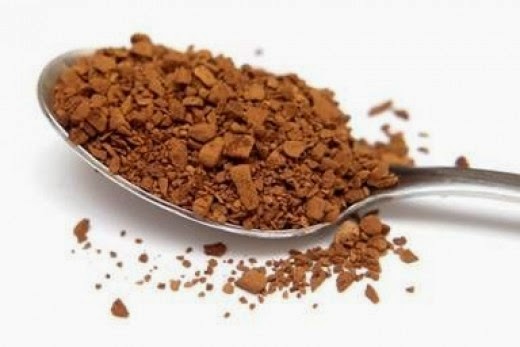
But it’s one thing to suspect your wife, and it’s quite another to have your suspicions confirmed.  Yesterday, I caught her in flagrante delicto, cup to her lips, as she sat secretly in the kitchen, Western Gazette on her knee, and her paraphernalia surrounding her on the table.

‘Darling, don’t get carried away. It’s just milky coffee. I haven’t been having an affair.’


‘What are you doing?’ I asked as I stared incredulously at the tin on the table.

‘I’m having a coffee,’ she replied, making no attempt to deny it.

‘No you’re not, you’re drinking instant.’

‘What of it,’ she replied, ‘I prefer it.’

‘Prefer it? How can you prefer it to actual coffee?’

‘I don’t like that shivery feeling I get when I drink one of your espressos, darling. It makes me feel like I’ve got the flu; they’re too strong.’

‘How long has this been going on?’ I said as I sank into the Windsor chair by the Aga.

‘Darling, don’t get carried away. It’s just milky coffee. I haven’t been having an affair.’

‘How long?’ I demanded.

‘Since you got that wretched Gaggia.’

I’d had my beloved espresso maker for over six years before moving to Hornblotton when it finally gave up the ghost. All that time my wife had been sneaking into the kitchen, boiling milk in a pan, and secretly adding … granules.

‘I could have made you a cappuccino,’ I whispered pathetically.

‘Yes, but it would still have been too strong – and anyway, I don’t much like the froth; it spoils my lipstick.’

Was there no end? Did she have no shame?

‘Latte?’ I squeaked plaintively.

She shook her head, and took another gulp of her revolting beverage, turning her attention once more to the local paper. I could smell the milk from the other side of the kitchen; it turned my stomach.

Thursday, 19 June 2014

Decline of the machines


Since moving to Somerset, I have had to manage without some of my favourite kitchen appliances: the dishwasher stayed in Scotland; the microwave is also absent, currently languishing in a cupboard because there are insufficient electrical sockets in our somewhat out-dated kitchen; and the Gaggia died when asked to produce coffee in an area where the water is basically made of limestone.

As my household chores revolve around making coffee and providing clean crockery to drink it from, I have had to seek manual alternatives. My morning regimen used to involve  pressing a button on the Gaggia. Once I had consumed my espresso, I simply placed my cup into the dishwasher, and went about my business, secure in the knowledge that my chores were complete until elevenses.  

‘My household chores revolve around making coffee and providing clean crockery to drink it from’

Now I must come downstairs, blurry-eyed and dry-mouthed, locate the coffee percolator and empty yesterday’s coffee grounds. Next, I need to scoop the grounds off the floor with my hand, and place them in the bin. Then I fill the percolator with hot water, add fresh coffee and place it on the Aga. Finally, I need to wipe the coffee grounds from the kettle handle, the Aga door and anything else I’ve recently touched.

 Next, the hunt for a cup commences. I usually find them in my study, lined up like a row of Babushka dolls from the ridiculously large 7am cup to the tiny it’s-my-fifth-of-the-day-and-my-hands-are-shaking cup. They all need to be washed up, so I wait while the water trickles into the bowl through the tap that is so blocked with lime-scale it is almost a stalactite; perhaps in time my sink might become a must-see extension to the Wookey Hole Experience. Then that zingy-lemon-freshness as I add bubbles. A few moments of splashing the cups around, and as I hear the percolator bubbling, we’re ready.

All this without any electricity and no harmful chemicals such as you might find in a dishwasher tab (I am not counting the tank of oil the Aga uses each month); I have unintentionally become an eco-warrior. I also start to wonder how much money I have saved since we moved South and I started doing things manually.

I don’t really miss the appliances; I used to hate unloading the dishwasher anyway, and I quite enjoy making the coffee from scratch. Recently, I have been looking at the other appliances, and considering the manual alternatives; I have bought a scythe and have invited my neighbour to let his sheep tend my lawn whilst I sell the mower, for example.

One morning last week when I was chatting to my wife about the pleasure I got from doing things by hand, I suggested she might like to consider abandoning her washing machine and her noisy vacuum cleaner. I passed her the Western Gazette, open at the free-ads, where I had already circled a washboard and a broom.

There was an awkward silence. Apparently, she is not keen to join my appliance-free revolution.


Wednesday, 18 June 2014

No such thing as a free lunch


It may be true that there is no such thing as a free lunch, but there is currently the offer of a free breakfast. At a local building supplies store, if you place an order before nine and it’s worth more than thirty quid, they’ll give you a free breakfast.

 ‘So, you’d drive all the way into town on an empty stomach so that you could get a ‘free’ breakfast by spending thirty pounds which you could then enjoy standing in the rain with a bunch of builders all with their bottoms showing over the tops of their trousers? Cooked, no doubt, by a fat, tattooed man who has probably not washed his hands in some time.’


I noticed the van that provided the free breakfast parked alongside the store entrance as I walked out carrying some wood for a gardening project. I could see the sizzling bacon, sausages, eggs. I love the smell of cholesterol in the morning – smells like…angina.
Sadly, I’d already breakfasted on porridge and toast; a pretty poor substitute, and no match for a plate loaded with fried goodies. I packed my car with the planks and nails, and sadly climbed in. I’d have to make sure that I returned before nine a.m. when I next needed some DIY stuff.
When I got back to Hornblotton, I told my wife that you could get this free breakfast. She looked at me in silence.
‘But you’ve already had breakfast,’ she said.
‘Yes, but next time, I would leave before breakfast – you know – to get my monies-worth,’ I explained.
‘So, you’d drive all the way into town on an empty stomach so that you could get a ‘free’ breakfast by spending thirty pounds which you could then enjoy standing in the rain with a bunch of builders all with their bottoms showing over the tops of their trousers? Cooked, no doubt, by a fat, tattooed man who has probably not washed his hands in some time.’
‘Well, now that you explain it like that it sounds daft. What I should do is get up early and have a small, early breakfast here, and then go into town to arrive at, say, eight forty-five. Then I’d have enough time to get my stuff and still have an appetite for that freebie.’
‘Whatever you think, darling,’ she smiled.
I wandered off to build the raised beds in the garden for next year’s vegetables. It was pouring with rain. When I came back indoors some hours later, covered from head to toe in thick, glutinous mud, and sopping wet, my wife was just leaving the house.
‘I’m off to the hair-dressers in Cary, darling. When you’ve hosed yourself down, remember to stick that casserole in the Aga,’ she said.
‘Why are you going now? I thought your appointment was at three?’
‘It is,’ she explained, ‘but they have a loyalty thing running at the moment. If you get your hair done three times, and buy some beauty products, they’ll give you a free manicure.’
I looked down at my blistered hands with their filthy, broken nails. I looked at my wife’s immaculate hands, with their long, perfect nails.
‘But your nails are fine, darling. Are the nail clippers broken? Couldn’t you find them?’ I asked.
‘No, they’re not broken – and they’re where you left them, on the floor behind the toilet, after you cut your toe-nails last night. Anyway, that’s not the point; this is just too good an offer to pass up.’
I nodded as she walked to the car.


'If you get your hair done three times, and buy some beauty products, they’ll give you a free manicure.’ I looked down at my blistered hands with their filthy, broken nails. I looked at my wife’s immaculate hands, with their long, perfect nails. ‘But your nails are fine, darling. Are the nail clippers broken?


‘Make sure the girl who does it washes her hands first,’ I shouted at the departing vehicle.
Standing on the patio, I could see I didn’t have enough timber to complete the raised beds project. I’d now be obliged to go back to the builders’ merchants in Yeovil. I wonder if I could persuade them to let me have a free lunch after all?